Mobile Detailing vs Detail Shop: Which to Book?
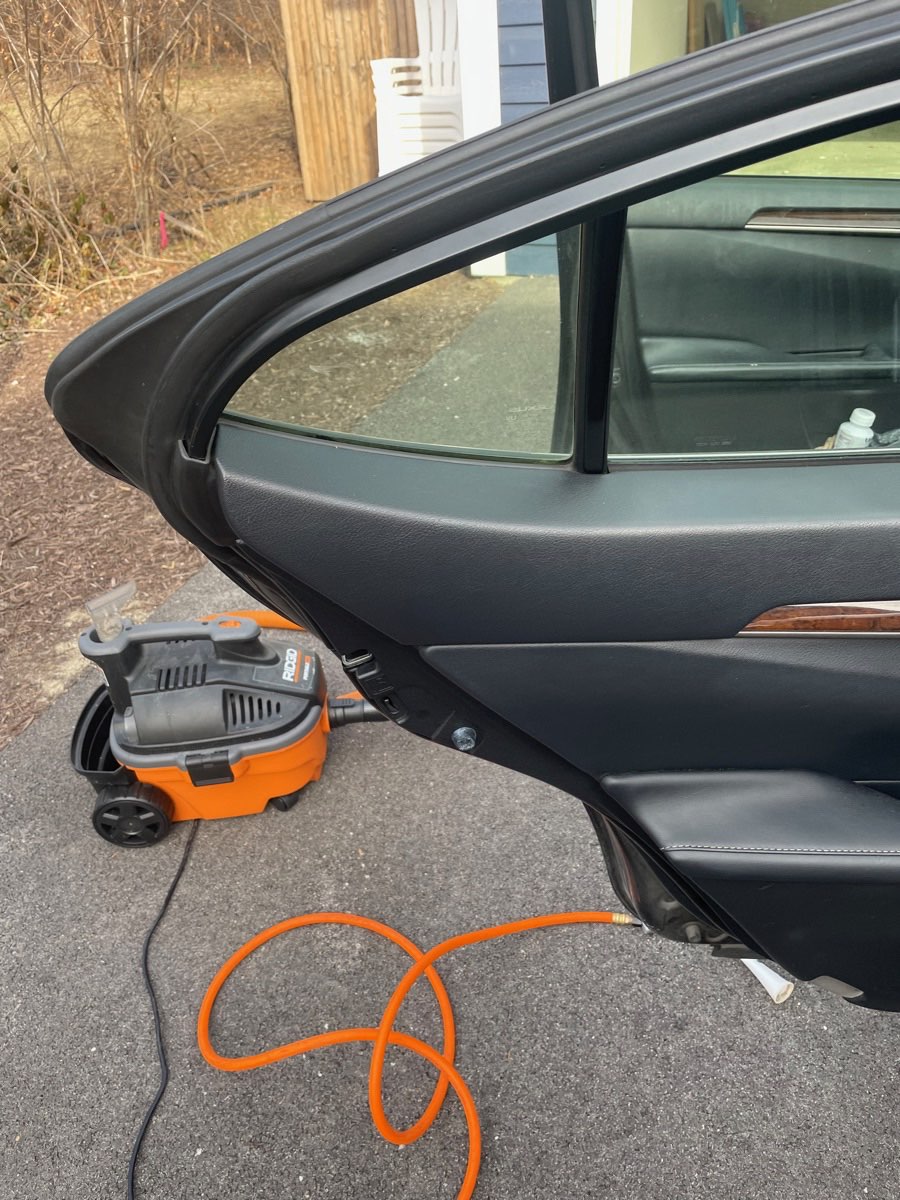
For interior details, stains, odors and car mold, mobile detailing vs a detail shop comes down to convenience, not quality: the same kinds of tools (a vacuum, a hot water extractor, a steamer, compressed air) come to your driveway, and the result depends on who does the work. A shop is the better call when the job needs a controlled space, like paint correction or a ceramic coating in bad weather, when it's freezing and your outdoor spigot is shut off, or when there's no room, water or outlet where the car is parked.
I run a mobile business, so I'll be straight about where a shop has the edge. Here's how the two compare job by job, what a mobile detail actually needs from you, and the questions that tell you more than "mobile or shop" ever will.
| Mobile detailing | Detail shop | |
|---|---|---|
| Where the work happens | Your home, apartment or work | Their building |
| Your time | No drop-off; you don't have to stay the whole time | Drop-off and pick-up, or wait there |
| Interior, stains, odor, mold | Same kinds of tools, brought to the car | Same kinds of tools |
| Paint correction, ceramic coating | Needs dry weather and a good spot; planned ahead | Controlled light and temperature, no wind or rain |
| Exterior work in winter | Limited by cold and shut-off spigots | Indoors, so the weather doesn't matter |
| What you provide | Room around the car, a spigot within about 150 feet, an outlet | The car |
| A wet or musty car | Doesn't have to be driven anywhere | Has to get there |
What's the difference between mobile detailing and a detail shop?
A detail shop works on your car in its own building. You drop the car off, or wait, and pick it up when it's done. A mobile detailer brings the equipment to wherever the car is parked and works there.
The steps of a good detail don't change with the address. An interior still gets a full vacuum under and between the seats, stains pre-treated and pulled out with a hot water extractor, steam on the vents, cupholders and seams, and the glass done last. The difference is the setting: a shop has a roof, its own water and power, and steady light. A mobile setup runs on your water and power and works in whatever weather the day brings.
Is mobile detailing as good as a shop?
For anything inside the car, yes, if the person doing it is good. The tools that do the real work inside a car (the extractor that pulls dirty water out of carpet and seat foam, the steamer, compressed air for the seams) are portable. What decides the result is the same in both places: how much time goes into the car, whether stains get the right pre-treat, and whether the carpet gets dried properly afterward.
That last part is the one people skip asking about. Extraction gets the dirty water out, but it doesn't dry the car by itself. The EPA's mold guidance says wet vacuums alone won't dry carpet, the padding underneath has to be dried too, and damp materials should be dried within 24 to 48 hours. A shop can park the car inside to dry. On a mobile job the car dries where it's parked, so ask how the detailer handles drying, and plan to leave the windows up in a garage or the doors open on a dry day if they tell you to.
When a detail shop is the better call
Rule of thumb: if the work is inside the car, mobile does it as well as a shop; if it's paint work and the weather is bad, book a shop or wait for a better day. A shop is usually the better fit when:
- The job is paint correction or a ceramic coating and the weather won't cooperate. Polishing needs good light to see swirls, and a coating has to go on a clean, dry panel and stay dry while it sets. Rain, wind, dust and cold all work against both. We do paint correction and ceramic coating mobile, but those two are priced on a call so we can plan the spot and the day together.
- It's the middle of winter and you want the outside done. Snow, ice and a frozen spigot stop an outdoor wash. A shop with an indoor bay can wash all year.
- There's nowhere to work. No room around the car, no spigot, no outlet, or an apartment, campus or HOA lot that doesn't allow it.
- You'd rather drop the car off and not think about it until it's done.
When mobile detailing is the better call
- The car is wet, musty or moldy. A car with soaked carpet doesn't need to be driven across town. Better, the detailer sees the car where it actually sits: which side is wet, what's above it, which spot it lives in. On a car mold removal job, part of the work is looking for where the water gets in, because mold can come back if the leak isn't fixed. If the leak needs a body or glass shop, you hear that before the cleaning starts.
- Your time is the hard part. No drop-off, no ride back. You leave the car unlocked or hand over the keys, take out your valuables, and you don't have to be there the whole time. In Columbia, MO, I work weekday evenings from 3 to 8 and weekends from 8 to 8, so the car gets done while you're home.
- It's mostly an interior job. Seats, carpets and mats, dash and console, doors and jambs, glass and the trunk. That's an interior detail, and pet hair and stain removal are always included, not add-ons.
- You want to talk to the person doing the work. With an owner-operator, the person who prices the job is the person who does it, so what you send in your photos is what gets worked on.

Mobile detailing in winter: the spigot problem
This is the part most mobile vs shop comparisons skip, and it matters on Chicago's North Shore and in Columbia every winter. A mobile detail needs a working outdoor spigot, and winter is exactly when people shut theirs off.
University of Missouri Extension says outdoor hose bibs are among the pipes that freeze most often, and recommends disconnecting hoses, covering the faucets and turning off the indoor valves that feed them. The Red Cross gives similar advice: drain and store hoses and close the inside valves that feed outdoor hose bibs. That's good for your pipes, and it means the spigot a detailer is counting on may be off for much of the winter.
How long that lasts depends on where you are. Around Chicago, the National Weather Service puts the normal first measurable snow at O'Hare around November 18 and the last around April 2. In Columbia, NOAA's 1991 to 2020 normals show about 26 nights at or below freezing in January and about 10 days when the high never gets above freezing.
What to do about it:
- Say it when you book. If your outdoor spigot is winterized, tell the detailer up front so they can plan, instead of finding out in your driveway.
- Know where the indoor shutoff is. If you're fine turning it back on for the day, the job can happen. Turn it off and drain the line again afterward, as Extension recommends.
- Use a garage or covered spot if you have one. Interior work can often still happen under cover. Exterior work may need to wait for a better day, and we tell you as early as we can.
- Split the job. An interior in January and the outside when the weather turns is often the right order anyway.
How to choose: 5 questions to ask before you book
These tell you more than "mobile or shop" ever will:
- What exactly is included? Under the seats and seat rails? The trunk? Door jambs? Pet hair and stains, or are those extra? My breakdown of what a full car detail includes is a good checklist to compare against.
- How do you get stains out of carpet and cloth seats? You want to hear pre-treat and extraction, not just "shampoo". Some stains won't lift (bleach spots, burns, sun fading), and a good detailer says so before the job. My stain by stain guide covers which is which.
- How will the carpet get dry? See the EPA guidance above. If the answer is vague, that's your answer.
- How is the outside washed? Toyota's owner's manual warns that automatic car wash brushes may scratch the paint, and says to wash the body with a sponge or soft cloth. Ask about the wash method: ours is a foam pre-wash and a two-bucket hand wash. The wrong method is how swirl marks end up on a black car.
- What do you need from me? For a mobile job: room around the car, a water spigot within about 150 feet and an outlet. For a shop: the drop-off and pick-up times.
If the car is wet after a leak or rain, read what to do in the first 48 hours before you book either one.
Want it done at your place?
We're mobile on Chicago's North Shore and in Columbia, MO. Interior details are booked by text, and mold, odor and heavy stain jobs are priced from photos: text them to 773-939-4446 or book a mobile detail online, and Vinny texts back, usually within the hour.
Questions
Is mobile detailing as good as a shop?
For interior, stain, odor and mold work, yes, when the detailer is good: the extractor, steamer and vacuum are portable. A shop has the edge for paint correction and ceramic coatings in bad weather, and for exterior work in the middle of winter.
What does a mobile detailer need from me?
For us: room to work around the car, a water spigot within about 150 feet and an outlet, the car unlocked or the keys handed over, and your valuables out. In an apartment, campus or HOA lot, check with the office first.
Can you get a car detailed in winter?
Yes. Interior work can often happen under a covered spot. The catch for mobile detailing is the outdoor spigot, which many people shut off for the winter, so say so when you book. Exterior work may need a warmer, drier day.
Is mobile detailing better than an automatic car wash?
They're different jobs. A car wash cleans the outside in minutes. A detail cleans the inside and outside by hand. Toyota's owner's manual warns that automatic car wash brushes may scratch the paint, which is one reason we hand wash.
Sources
- US EPA, Mold Course Chapter 4 (dry damp items within 24 to 48 hours; wet vacuums alone will not dry carpets; the carpet padding also must be dried)
- University of Missouri Extension, Frozen pipes create big problems during cold weather (outdoor hose bibs freeze most often; disconnect hoses, cover faucets, turn off the indoor valves that supply them)
- American Red Cross, Preventing and thawing frozen pipes (remove and drain hoses; close inside valves supplying outdoor hose bibs)
- NOAA National Centers for Environmental Information, Monthly climate normals 1991 to 2020, Columbia Regional Airport (January: 26.1 days with a low at or below 32 F, 10.0 days with a high at or below 32 F)
- National Weather Service Chicago, Snow climatology (normal first measurable snow November 18 and last April 2 at O'Hare, 1991 to 2020)
- Toyota, 2026 Tacoma owner's manual: cleaning and protecting the vehicle exterior (automatic car wash brushes may scratch the paint; wash with a sponge or soft cloth)